ABSTRACT:
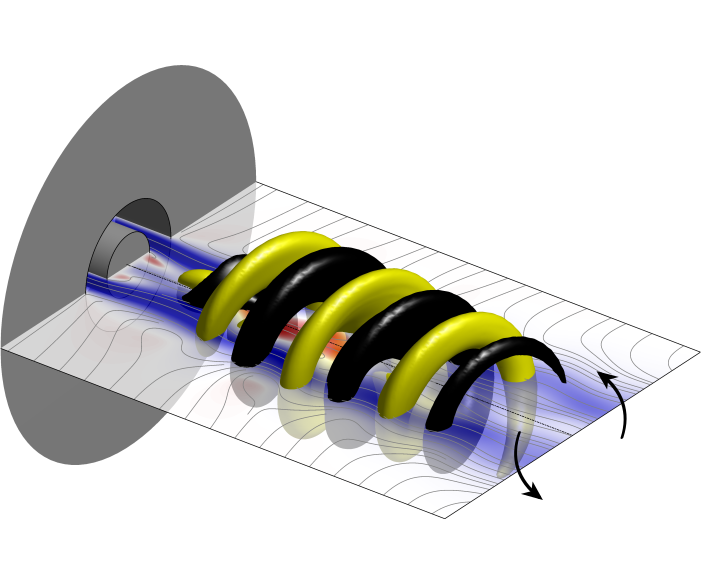
Among the family of canonical shear flows, swirling jets represent a remarkable genus with widespread practical and scientific interest. Despite this interest, the swirling jet parameter space has proven difficult to repeatably characterize via experiments and conventional time-marching computations. Even in the laminar regime, swirling jets host a suite of rich physics related to the complex interplay among axial and azimuthal shear layers, centrifugal forces, propagating inertial waves, and various geometric effects. These myriad interactions lead to pronounced nonlinear effects including, in particular, multivalued relationships among distinct steady and unsteady states. In this seminar, I will summarize results from three recent reports that rigorously characterize the dynamics and bifurcations of circular and annular laminar swirling jets using branch continuation methods. This approach allows a concrete exposition of the swirling jet’s underlying state space, which can then be related back to its behavior in the physical space. The chosen examples offer insight into several important dynamical features of swirling jets including central jet/wall jet transitions and precessing vortex core (PVC) oscillations.
BIO:
Christopher Douglas is currently a Marie Sklodowska–Curie postdoctoral fellow at the Hydrodynamics Laboratory (LadHyX) at Ecole Polytechnique in France. Chris’ postdoctoral research, supervised by Lutz Lesshafft (l’X) and Wolfgang Polifke (TUM) investigates the response of hydrogen jet flames to generic perturbations using the framework of resolvent analysis. Prior to his postdoc, Chris completed his PhD in Mechanical Engineering at Georgia Tech in May 2021 under the supervision of Tim Lieuwen, where his doctoral studies focused on the dynamics of swirling jets and jet flames.
Abstract:
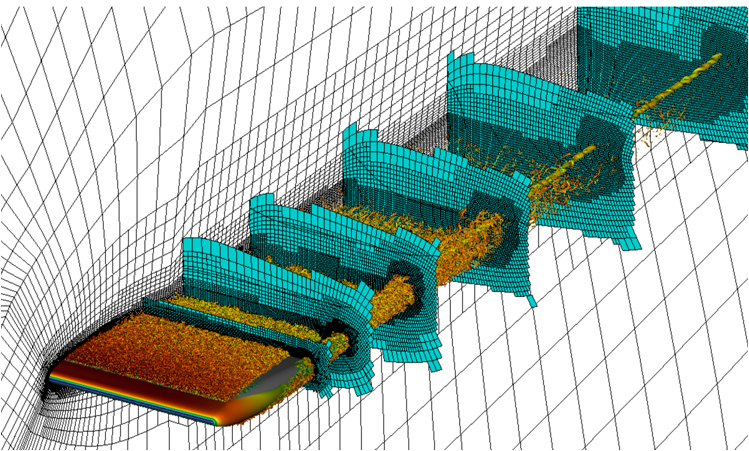
The advent of new powerful deep neural networks (DNNs) has fostered their application in a wide range of research areas, including more recently in fluid mechanics. In this presentation, we will cover some of the fundamentals of deep learning applied to computational fluid dynamics (CFD). Furthermore, we explore the capabilities of DNNs to perform various predictions in turbulent flows: we will use convolutional neural networks (CNNs) for non-intrusive sensing, i.e. to predict the flow in a turbulent open channel based on quantities measured at the wall. We show that it is possible to obtain very good flow predictions, outperforming traditional linear models, and we showcase the potential of transfer learning between friction Reynolds numbers of 180 and 550. We also discuss other modelling methods based on autoencoders (AEs) and generative adversarial networks (GANs), and we present results of deep-reinforcement-learning-based flow control.
Bio:
Dr. Ricardo Vinuesa is an Associate Professor at the Department of Engineering Mechanics, at KTH Royal Institute of Technology in Stockholm. He is also a Researcher at the KTH Climate Action Centre and Vice Director of the KTH Digitalization Platform. He studied Mechanical Engineering at the Polytechnic University of Valencia (Spain), and he received his PhD in Mechanical and Aerospace Engineering from the Illinois Institute of Technology in Chicago. His research combines numerical simulations and data-driven methods to understand and model complex wall-bounded turbulent flows, such as the boundary layers developing around wings and urban environments. Dr. Vinuesa has received, among others, an ERC Consolidator Grant and the Göran Gustafsson Award for Young Researchers.
Le Groupe Transversal Simulation Numérique et Modélisation (GT SiMoN) a pour ambition d’aider les chercheurs de l’institut Pprime Pprime et du Laboratoire de Mathématiques et Applications à développer des synergies sur des activités de recherche en lien avec la simulation numérique et le calcul scientifique afin d’une part d’aider dans les axes scientifiques des laboratoires et d’autre part de permettre l’éclosion de nouvelles thématiques. Cette année, le GT-SiMoN organise à Poitiers un évènement fédérateur au niveau régional.
Dans la continuité des journées Calcul et Simulation en Nouvelle Aquitaine organisées à Arcachon en décembre 2021, nous organisons les 4 et 5 Octobre 2022 à Poitiers un Workshop sur une thématique commune à un nombre important de chercheurs de l’institut Pprime, du LMA et au niveau régional, à savoir les méthodes de frontières immergées (IBM). Le but de ces deux journées est de poursuivre les échanges scientifiques avec les collègues de la région afin de déboucher sur deux ou trois propositions de stages Master2 que nous financerons pour l’année universitaire 2022/2023.
Ce Workshop sera divisé en une journée dédiée aux IBM pour écoulements incompressibles et l’autre aux écoulements compressibles. Ces journées seront elles-mêmes divisées en deux moments, la matinée dédiée aux présentations et l’après-midi à des tours de table/discussions sur les sujets vues le matin. Les matinées débuteront par deux exposés d’experts suivis d’exposés de jeunes docteurs ou doctorants confirmés, qui présenteront leurs travaux sur ces méthodes.
Comité d’organisation :
Nicolas James
Philippe Parnaudeau
Comité scientifique :
Héloïse Beaugendre
Julien Dambrine
Eric Lamballais
Thomas Milcent
Arnaud Mura
Site: https://jibmna.conference.univ-poitiers.fr/index.php
Freezing contact line
Thomas Séon
Institut ∂’Alembert, CNRS, Sorbonne Université, Paris, France
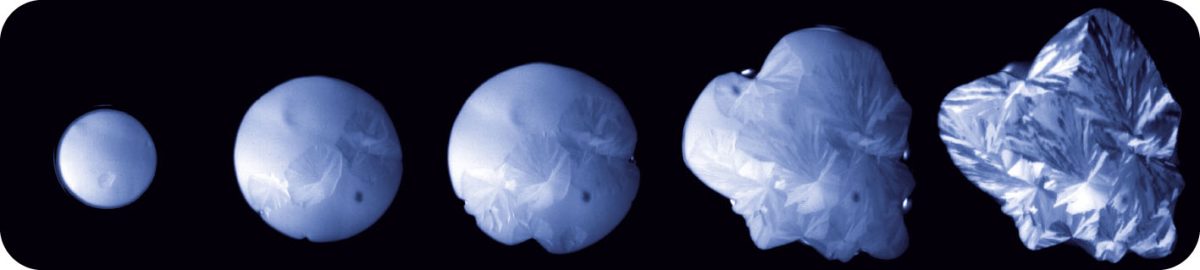
Ice accretion on airplane, wire or roadway, formation of ice fall, ice stalactite, frozen river or aufeis, are a few examples of ice structures formed by the solidification of capillary flows (drop, rivulet, film). Among the many scientific questions that remain open to understand these problems, the effect of freezing on the contact line motion is undoubtedly one of the most important and mysterious. In this talk, we experimentally investigate three situations where advancing and receding contact line is coupled to freezing : capillary and inertial spreading of a water droplet on a cold substrate and water film dewetting on its own ice. These configurations allow us to propose the main mechanisms that explain the arrest of a contact line due to solidification and to tackle the intricate problem of the wetting of water on ice.
ABSTRACT
Passive and active flow control techniques are applied experimentally to examine different aspects of a supersonic multistream rectangular nozzle representing a modern airframe-integrated variable cycle engine. The flow is comprised of a core stream (M = 1.6) and bypass (M = 1.0) that merge behind a splitter plate and exit through a Single Expansion Ramp Nozzle (SERN) onto an aft-deck. Previous efforts for the nominal nozzle configuration have shown that an instability initiated at the splitter plate trailing edge (SPTE) influences the effectiveness of the third stream as a barrier for the aft-deck and persists through the entire domain due to its reaction with the shock train. To address this, the passive flow control was implemented by introducing sinusoidal spanwise modifications along the splitter plate edge. The SPTE was identified as the highest region of sensitivity via LES. Results on different spanwise wavenumbers indicate reduction of the dominating tone with increasing wavenumber. Additionally, the sinusoidal trailing edge induces streamwise vorticity, which enhances mixing between the two streams and breaks up the shed structures seen previously. A wavenumber corresponding to one simulated was tested experimentally via the use of simultaneous nearfield pressure and velocity in conjunction with far field acoustics. Fairfield acoustic measurements have confirmed the diminishment of the tone for the wavy SPTE. PIV and velocity profiles for mean fields revealed higher plume vectoring for the nominal aft-deck. The shear layers and the region along the aft-deck surface displayed significant enhancement of velocity variability through low order statistics. As a result of this increase, the POD modes were reordered for the wavy SPTE. Wavy modes had smaller spatial structures presented in lower modes, with increased energy content when compared to the same modes in the nominal flow. Current active control experiments involve replacing the wavy splitter with a bank of jets spaced at the same wavelength. This allows us to explore if similar results to the wavy splitter can be obtained with the nominal splitter and the bank of jets.
Mark Glauser, PhD
Professor of Mechanical and Aerospace Engineering
College of Engineering and Computer Science
Professor of Physics, College of Arts and Sciences
Syracuse University
263 Link Hall
Syracuse, New York 13244
Fellow: AIAA, ASME, APS, Institute of Physics (UK)
Lucille Furgerot
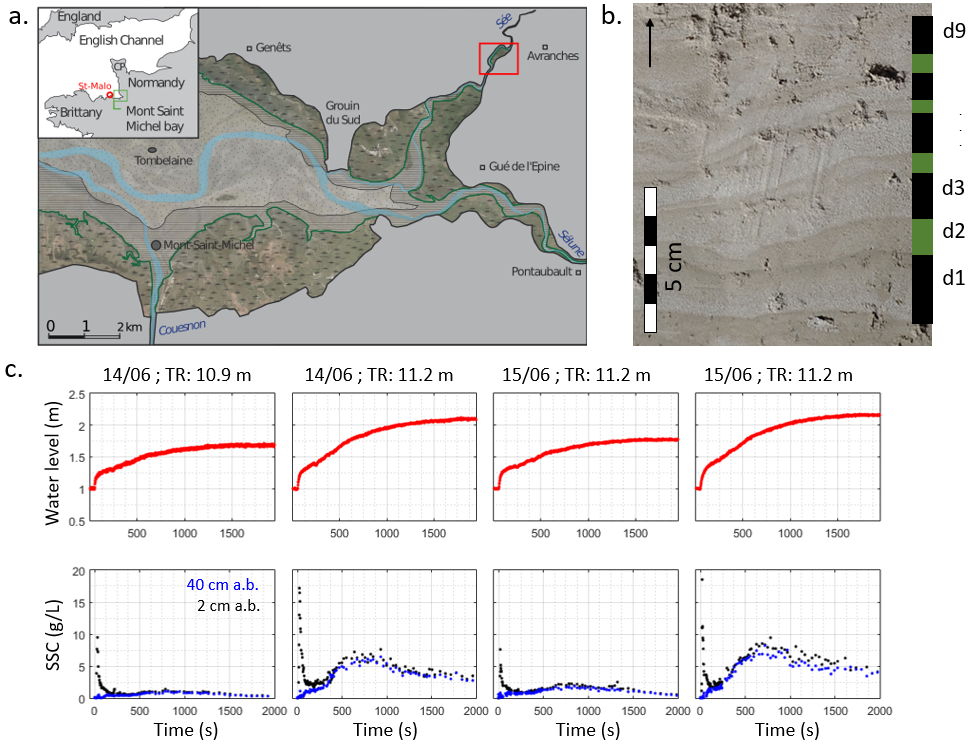
Le projet ANR Mascaret (2011 à 2015) a permis, entre autres, d’instrumenter le mascaret dans la baie du Mont-Saint-Michel. Cette baie hypertidal très étudiée dans sa partie externe pour des problématiques d’envasement reste peu connue dans sa partie interne. La dernière campagne de terrain menée dans l’estuaire interne de la Sée sur un cycle de marée semi-mensuel (14 jours), a fourni un set de données complet sur l’évolution des ressauts de marées en fonction du marnage et de leur impact sur le transport sédimentaire. Le couplage de ces données avec quelques observations récentes d’enregistrements sédimentaires met en évidence une amplification de l’inégalité diurne pouvant altérer la lecture des archives sédimentaires.
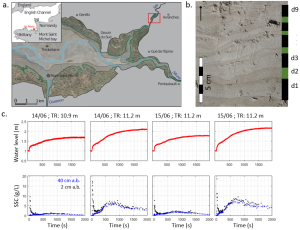
Légende :
a.Localisation du site d’étude (rectangle rouge); b.Lecture d’une coupe sédimentaire de berge. Chaque doublet (d1 à d9) représente le dépôt sédimentaire lors d’une seule phase de flot (1 doublet = 1 marée) ; c.Evolution de la hauteur d’eau (en rouge) et de la concentration en matières en suspension sur le fond (points noirs) et à 40 cm au-dessus du fond (points bleus), pour 4 marées successives. a.B. = above the bottom; TR = marnage externe mesuré à St Malo.
Depuis 1997, Philippe Micheau est professeur de mécatronique au département de génie mécanique de l’Université de Sherbrooke (UdeS, Québec, Canada) et membre du réputé Groupe d’Acoustique de l’UdeS (GAUS). Il possède une expertise en mécatronique, en contrôle actif de bruits et vibrations, méthodes d’inspection ultrasonore et en ventilation liquidienne (89 articles, 10 brevets). Il a collaboré à de nombreux projets de recherche académique et industriel, nationaux et internationaux dans le domaine de l’acoustique et du médical. En 2018, après 18 ans de recherche sur la technologie Inolivent de ventilateur liquidien, il a co-fondé la compagnie Orixha (France) pour transférer ce traitement innovant dans les hôpitaux. Depuis 2020, il dirige le Centre Recherche Acoustique-Signal-Humain (CRASH-UdeS).
Le Centre Recherche Acoustique-Signal-Humain (CRASH-UdeS) fondé en 2020 est reconnu comme l’un des 23 Centres de recherche de l’Université de Sherbrooke. Il regroupe 18 professeures et professeurs sur 3 facultés (génie, école de musique, et physiologie), plus de 60 étudiants et 10 professionnels de recherche. Il est reconnu pour l’excellence de ses activités et comme un espace privilégié où les étudiantes et étudiants des cycles supérieurs peuvent mener leur projet de recherche. Il vise à offrir un environnement de recherche diversifié, inclusif et équitable pour tous ses membres. Le CRASH-UdeS gère l’ensemble de son infrastructure majeure (salle anéchoïque, salle réverbérante, soufflerie anéchoïque) et de son équipement (vibromètre laser 3D, système d’acquisition multi-canaux, réseaux de microphones), via la Plateforme d’Instrumentation Mécanique de l’UdeS (PIMUS) reconnue et appuyée financièrement par la Faculté de Génie de l’UdeS. Au sein du CRASH-UdeS, le Groupe d’Acoustique de l’Université de Sherbrooke (GAUS), fondé en 1984, est un regroupement de 6 professeurs constituant le groupe académique en acoustique le plus réputé au Canada. En 2017, il a établi un partenariat avec plusieurs laboratoires d’acoustique réputés à Lyon et au Mans en France pour la création d’un Laboratoire International Associé (LIA) Jacques-Cartier en acoustique, qui a été approuvé par le Centre National de la Recherche Scientifique (CNRS, France).
Centre de recherche acoustique-signal-humain de l’Université de Sherbrooke – Université de Sherbrooke (usherbrooke.ca)
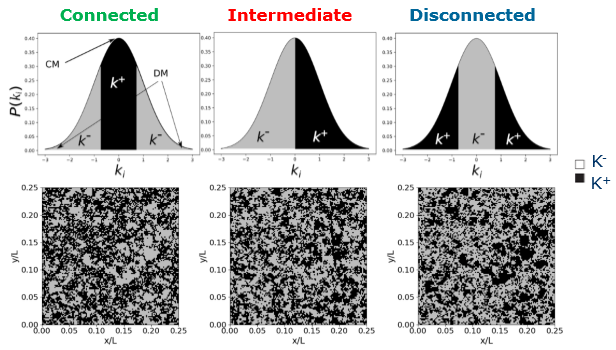
Abstract: Effective or equivalent petrophysical properties obtained in the upscaling process strongly depend on the connectivity of the more conductive components (facies).
This is why a lot of effort has been devoted to characterize this connectivity, and quantify its impact on flow and transport. In this talk, we’ll discuss a numerical study over the influence of connectivity on the equivalent hydraulic conductivity (Keq) of binary media samples with different connectivity structures, using some concepts from percolation theory.
We will show that the influence of a connectivity structure on Keq is different in 2D than in 3D. Also, we will show that, in both cases, any influence of connectivity on Keq is well accounted for simply by a shift in the percolation threshold, which suggests that Keq is controlled mainly by the proximity to percolation.
Dr.Alejandro Boschan
Grupo de Medios Porosos, Facultad de Ingeniería, UBA
http://web.fi.uba.ar/~abosch/ <http://web.fi.uba.ar/~abosch/>
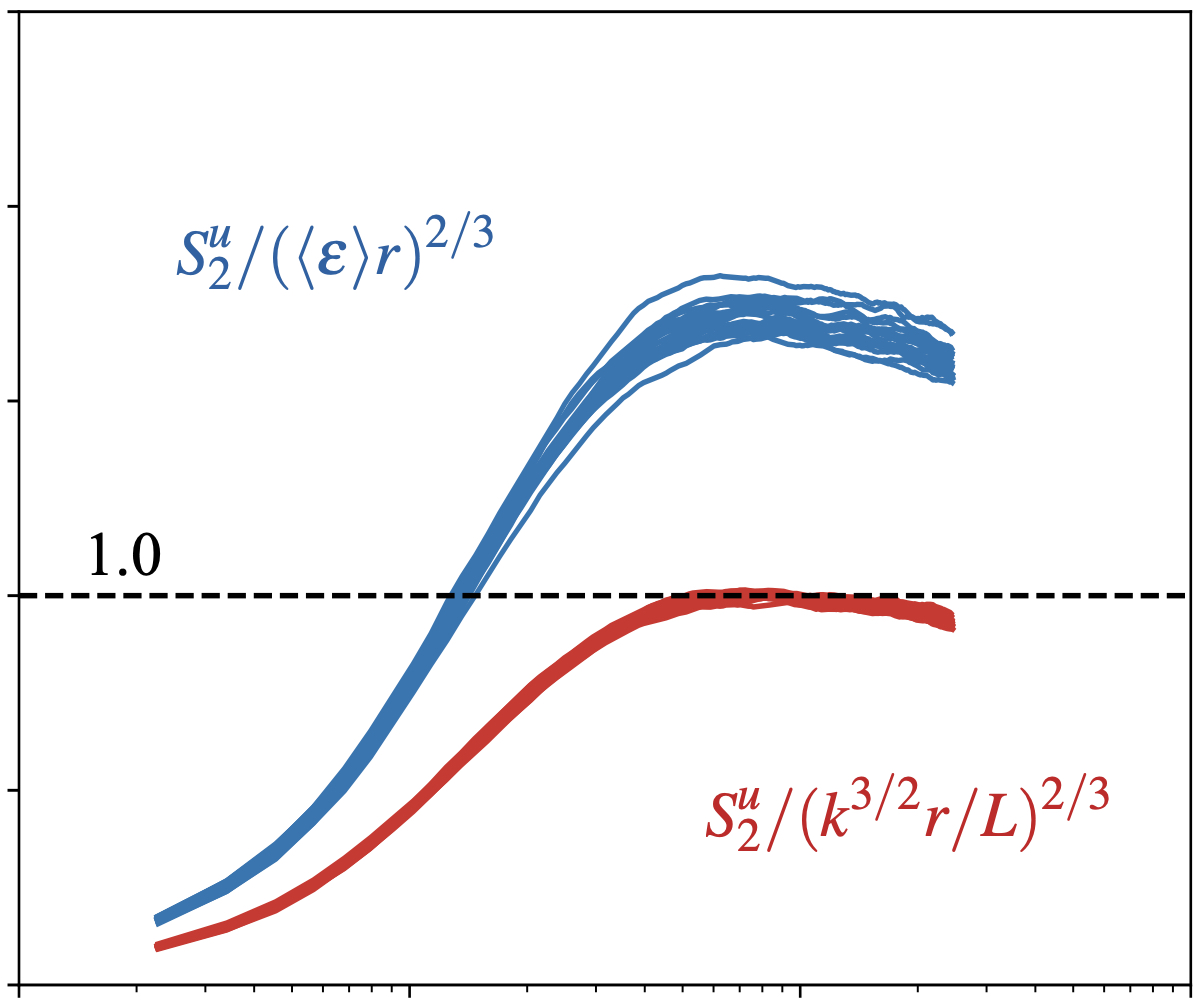
Abstract: A theory of non-homogeneous turbulence is developed and applied to boundary-free shear flows. The theory introduces assumptions of inner and outer similarity for the non-homogeneity of two-point statistics, and predicts power-law scalings of second-order structure functions that have some similarities with but also some differences from Kolmogorov scalings. These scalings arise as a consequence of these assumptions, of the general interscale and interspace energy balance, and of an inner–outer equivalence hypothesis for turbulence dissipation. They reduce to the usual Kolmogorov scalings in stationary homogeneous turbulence. Comparisons with structure function data from three qualitatively different turbulent wakes provide support for the theory’s predictions but also raise new questions for future research.
https://lmfl.cnrs.fr
https://lmfl.cnrs.fr/perso/christos-vassilicos-home/
Mécanique des fluides et aéronautique dans la première moitié du 20e siècle : enjeux scientifiques, industriels et culturels
François Charru
Institut de mécanique des fluides de Toulouse – Université de Toulouse
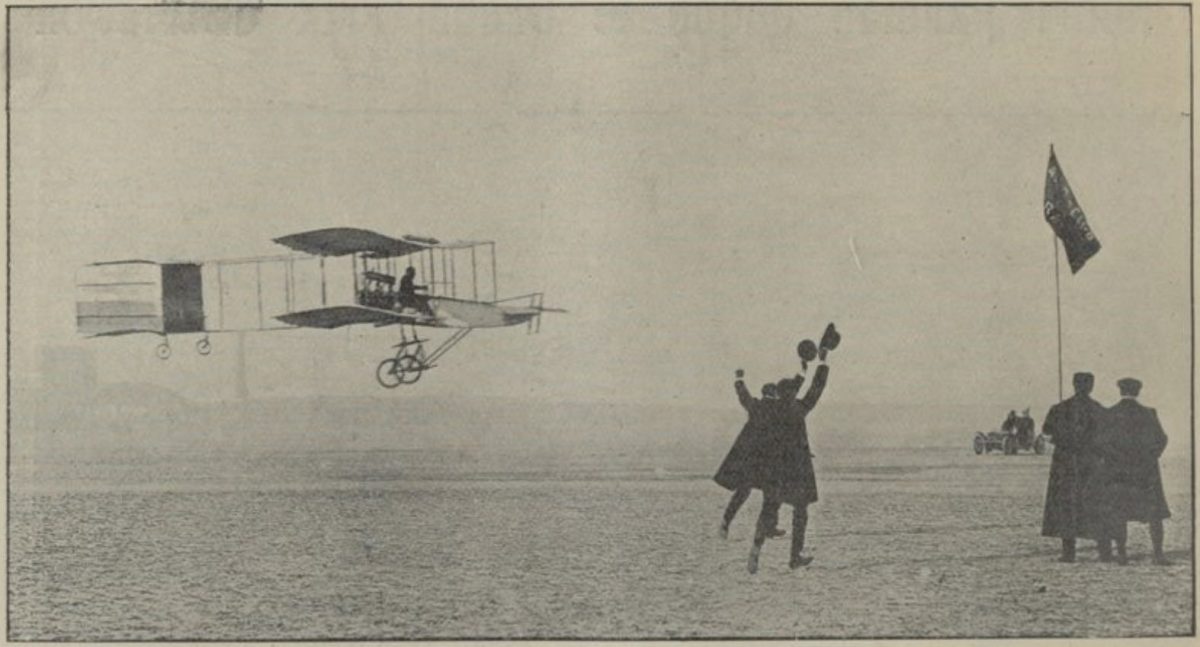
L’aéronautique française a connu dans la première décennie du 20e siècle un essor fulgurant, porté par de généreux mécènes privés et par un enthousiasme populaire considérable. Mais cette aéronautique décline dans l’entre-deux-guerres, faute de savoir s’organiser en véritable industrie. Un ministère de l’Air est créé en 1928 afin de redresser la situation. Son énergique directeur technique, Albert Caquot, lance alors un ambitieux programme en faveur de la mécanique des fluides, avec la création de quatre instituts et cinq centres d’annexes d’enseignement — dont un à la faculté des sciences de Poitiers. Ce programme, par son ampleur et sa hauteur de vue, constitue une première politique nationale pour la recherche scientifique et préfigure la création ultérieure des grands organismes nationaux de recherche.
Du côté scientifique, la possibilité même de l’envol mécanique d’un « plus lourd que l’air » a longtemps divisé les savants, et l’évidence de sa réalisation par d’intrépides aventuriers suscite des controverses. La théorie de la couche limite de Ludwig Prandtl, à Göttingen, ne sera ainsi acceptée en Angleterre qu’au milieu des années 1920. Un autre domaine se développe alors en Allemagne et en Angleterre, en liaison avec la mécanique statistique : l’étude des écoulements turbulents. Comment les nouvelles théories, qui réconcilient l’hydraulique des ingénieurs avec la mécanique « rationnelle », ont-elles été reçues en France ? Quelles ont été les contributions françaises ? Quel a été l’effet des moyens considérables investis par le ministère de l’Air ? Le séminaire présentera cette histoire dans ses dimensions scientifiques, industrielles et culturelles, en y situant plus particulièrement la mécanique poitevine.
https://www.imft.fr
https://www.imft.fr/annuaire/charru-francois/
