Le contrôle actif du bruit est bien connu grâce à des produits ayant rencontré un large succès, tels que les casques à réduction active. Cependant, le contrôle actif multicanal constitue un axe de recherche ouvert, dont le contrôle actif en nacelle des bruits de turboréacteurs. Le projet RHAPSODI a été initialement motivé pour adresser le problème de l’atténuation active du bruit tonal intense rayonné par la soufflante (fan noise). Les défis sont liés au déploiement d’un grand nombre de sources d’anti-bruit et de microphones dans un environnement hostile. L’originalité de l’approche proposée réside dans le déploiement de sources acoustiques pneumatiques harmoniques (Harmonic Acoustic Pneumatic Source, HAPS) capable de générer de forts niveaux sonores. La première partie de la présentation porte sur un historique du haut-parleur à air comprimé, depuis l’auxétophone jusqu’au HAPS. Cette partie aborde la théorie et les résultats expérimentaux des HAPS, des basses fréquences (inférieures à 100 Hz) jusqu’aux ultrasons (audelà de 10 kHz), en l’absence d’écoulement et jusqu’à un nombre de Mach de 0,5.
La seconde partie traite du contrôle actif avec de multiples HAPS. La commande de chaqueHAPS nécessite de piloter l’amplitude et la phase d’une source dont la dynamique de réponse est lente. Les signaux des microphones d’erreur, situés à proximité des HAPS, doivent être corrigés des effets de champ proche. Les résultats expérimentaux en contrôle actif tonal montrent une atténuation de l’ordre de 20 dB SPL, obtenue avec un anneau de 6 HAPS sans écoulement (130 dB SWL), et avec 3 HAPS en conduit infini avec écoulement (Mach 0,5, 144 dB max).
La dernière partie met en perspective les retombées futures de ces travaux. La méthode de contrôle développée dans le cadre de RHAPSODI est adaptable à des bruits large bande, comme le montre son application récente au double vitrage actif utilisant des haut-parleurs électrodynamiques. Par ailleurs, les travaux en cours visent à accélérer la dynamique des HAPS afin de permettre une utilisation en sous-bandes. La perspective est d’explorer le contrôle actif de la directivité en champ libre.
Lukas Dür, doctorant à TU-Graz – Institute of Thermodynamics and Sustainable Propulsion Systems (ITnA).
Efficient Hermetic Reciprocating Compressors
After a brief introduction of TU Graz and the Institute of Thermodynamics and Sustainable Propulsion Systems (ITnA) the presentation focuses on Lukas Dür’s PhD research. Using a combination of experimental and simulation approaches, the work quantifies loss mechanisms and optimization levers, delivering validated efficiency gains for compressors in domestic refrigeration systems.
Effets de mémoire dans les contacts rugueux : du continu au moléculaire
Bien que le modèle de frottement « de Coulomb » suppose un coefficient de frottement indépendant de la vitesse de glissement et du temps de contact, la campagne expérimentale de Coulomb a démontré l’influence de ces deux paramètres sur la force résistant le glissement entre deux solides. Depuis, ce comportement « rate-and-state » a été caractérisé pour de nombreux systèmes, notamment par Rice, Dieterich et Ruina, avec un comportement quasi-universel caractéristique : une dépendance logarithmique du frottement par rapport au temps de contact et à la vitesse. Dans ce séminaire, j’explorerai les origines de l’évolution du frottement avec le temps de contact sous le prisme du contact rugueux.
Dans un premier temps, je décrirai la dynamique d’évolution de l’aire de contact entre deux solides rugueux viscoélastiques lorsque la force normale évolue de manière non-monotone. Des expériences sur contacts entre blocs d’acrylique, menées par Sam Dillavou et Shmuel Rubinstein, démontrent l’existence d’effets mémoire à long terme et une décroissance de l’aire de contact longtemps après une diminution de la pression de contact. Je discuterai des modèles que l’on peut employer pour tenter de reproduire ces expériences, de ce qu’ils prédisent, et démontrerai ainsi l’incapacité des modèles actuels de contact rugueux viscoélastique à reproduire les effets observés expérimentalement sur l’acrylique.
Dans un second temps, je parlerai de l’évolution de la force de frottement statique au repos pour des surfaces rugueuses recouvertes d’une mono-couche d’acide gras. En alliant des simulations de dynamique moléculaire avec des résultats expérimentaux obtenus au LTDS de l’École Centrale de Lyon par Alexia Crespo, Juliette Cayer-Barrioz et Denis Mazuyer, je montrerai le rôle fondamental de la rugosité dans l’augmentation de la force de frottement, et que l’effacement de la mémoire du contact lors du glissement est liée à l’évolution des liens moléculaires entre les deux surfaces, et non à la morphologie des micro-contacts.
Experimental and numerical studies of buffer impulse dry gas seals
For more than 30 years, gas seal technology has been a key factor in ensuring the safety and reliability of centrifugal pumps, compressors, agitators and rotary equipment in the chemical and petrochemical industries. In view of changing environmental regulations, dry gas lubrication ensures the purity of the pumped liquid medium and zero emissions of toxic substances. The non-contact function of the mechanical seal is achieved thanks to the special topography of one of the surfaces of the seal rings, which creates a gasdynamic opening force during shaft rotation, eliminating friction. Buffer dry gas seals use a regulated inert buffer gas at a pressure of 1-2 bars above the process pressure to seal the process fluid from the atmosphere. At the same time, gas seals have a minimal temperature rise and lower energy consumption than liquid seals. And the global spread of non-contact seals with gas lubrication has led to a reduction in parasitic power losses due to friction and significant energy savings.
Among the double gasdynamic seals with radial arrangement of stages, the significant advantages of buffer impulse mechanical seals are distinguished by their non-contact operation mode and hydrostatic opening force provided by the shaft rotation and periodic impulse supplying of the cavities by feeders with the buffer medium. These seals are much easier to manufacture and reliable. Therefore, in these studies, using the CFD simulation, a thermohydrodynamic analysis of a buffer impulse dry gas seals were performed. Laminar air flow was considered as well as ideal gas law, and heat transfer through the solid surfaces of the seal rings. The transient problem of the flow during the circumferential interaction of the rotor and stator gap regions was solved, which made it possible to simulate the dynamic process of supplying the buffer pressure to the cavities of the buffer impulse seal. The validity of the proposed numerical models was verified by the available experimental results on the leakages, the average temperature of the face surface of the floating ring at the exit from the seal and pressure pulsations in the cavities and on the inter-cavity land. An analysis was performed on the influence of the fixed gap size, the depth and number of cavities and the pressure difference between the buffer and sealed medium on the amplitude of pressure pulsations, the magnitude of the gap opening force, leakages and the surface average temperature of the floating ring at the exit from the seal, as well as pressure and temperature distribution along the circumference and radius of the sealing rings. The thermal and mechanical deformations of the rings and the dynamic coefficients of stiffness and damping of the buffer impulse seal were obtained.
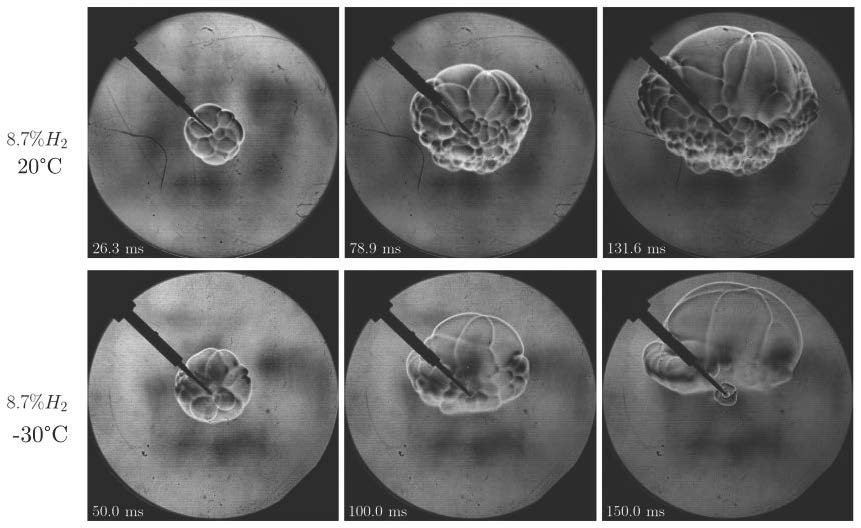
Storing hydrogen in liquid form increases its volumetric energy density, which facilitates transportation. If the confinement system of a hydrogen cryogenic tank fails, the liquid hydrogen (LH2) will vaporize and form low-temperature gaseous hydrogen (GH2). To prevent industrial risk during the storage and transportation of LH2 it is essential to characterize the flammable properties of a GH2-air cloud at low temperature. In particular, the flammability limits must be determined to ensure that the concentration of GH₂ remains below the level that could potentially lead to an explosion. Another fundamental property is the unstretch laminar burning velocity (LBV), which is intrinsic to the chemistry driving the flame propagation. Its determination has two major implications: (i) A comparison with the prediction of LBV from a kinetic model allows one to evaluate the reliability of different mechanisms (which are typically not designed to operate at low temperatures). (ii) LBV serves as a design criterion in numerous engineering applications and numerical models.
At present, only flammability limits for upward propagating flames in a tube are available (Karim et al. 1984), while laminar burning velocity (Ghosh et al. 2022) were measured within a burner for GH2-air at low temperature.
This study focus on the behavior of lean H2 mixture with air close to flammability limits as a function of temperature. We were able to design and operate a visually accessible constant volume combustion vessel to measure the impact of sub-zero temperature on flame structure. Our result highlight the influence of the mode of energy deposit on flammability limits by comparing 2 methods of arc ignition. Flame structure and over-pressure inside the vessel was recorded and showed for the first time how instabilities are impacted by the initial temperature.
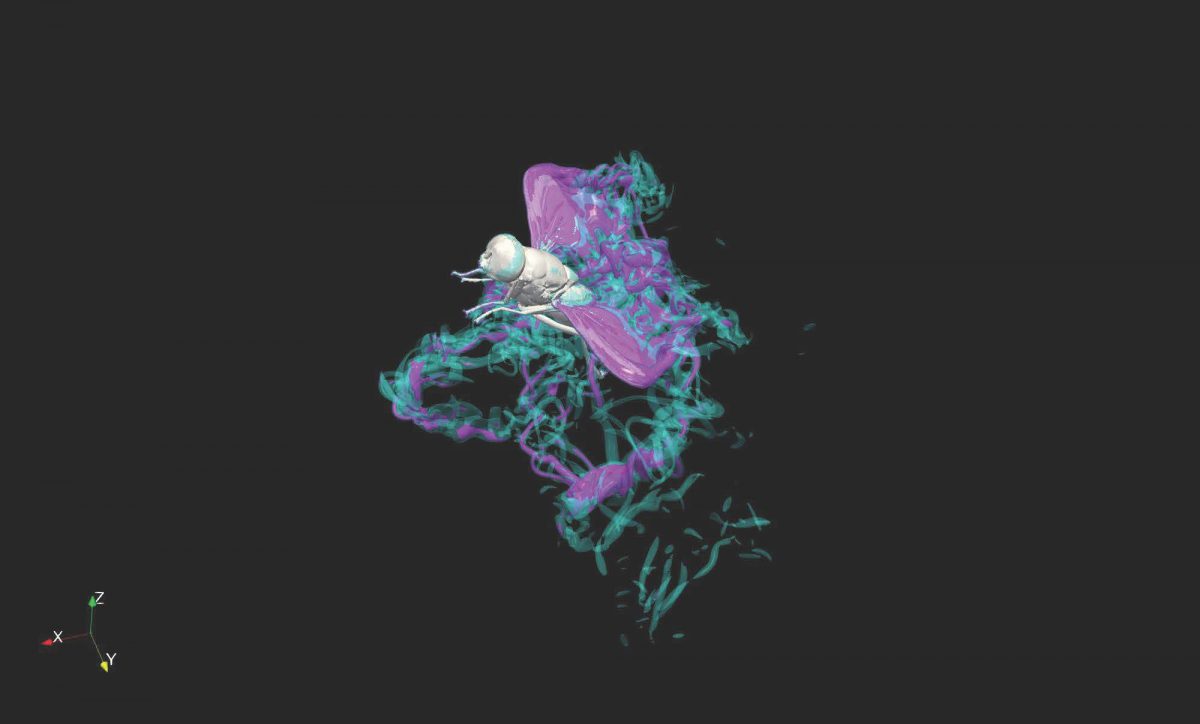
Flying insects, spectacular little flapping machines with enormous evolutionary success, are an invaluable source of inspiration for a large, interdisciplinary community of scientists. In this talk I will show our latest results on the aerodynamics of houseflies (M. domestica) and dragonflies (P. flavescens) flight with broken wings, with a focus on the numerical aspects of this work. We combine wing wear experiments, in which we study how wing damage progresses over time, with state of the art numerical simulations of the aerodynamics of animals with broken wings. The numerical simulations are done with our in-house open-source solver WABBIT, which combines wavelet-based adaptivity with an efficient parallelization to exploit massively parallel supercomputers. It will be presented in some detail in this talk. From those high-fidelity data, we obtain a data-driven quasi-steady aerodynamic model, which, combined with the full-scale simulations, allows us to explain the energetic cost of flying with broken wings. This insight allows us to draw conclusions on the reserve animals are built with, which a potentially important guideline for the design of aerial robots, as well as an important factor for biological fitness.
Sofiane Bendilmi, notre nouveau collègue au sein de l’équipe TriboLub, présentera ses travaux.
Cette présentation sera suivie d’une réunion d’équipe.
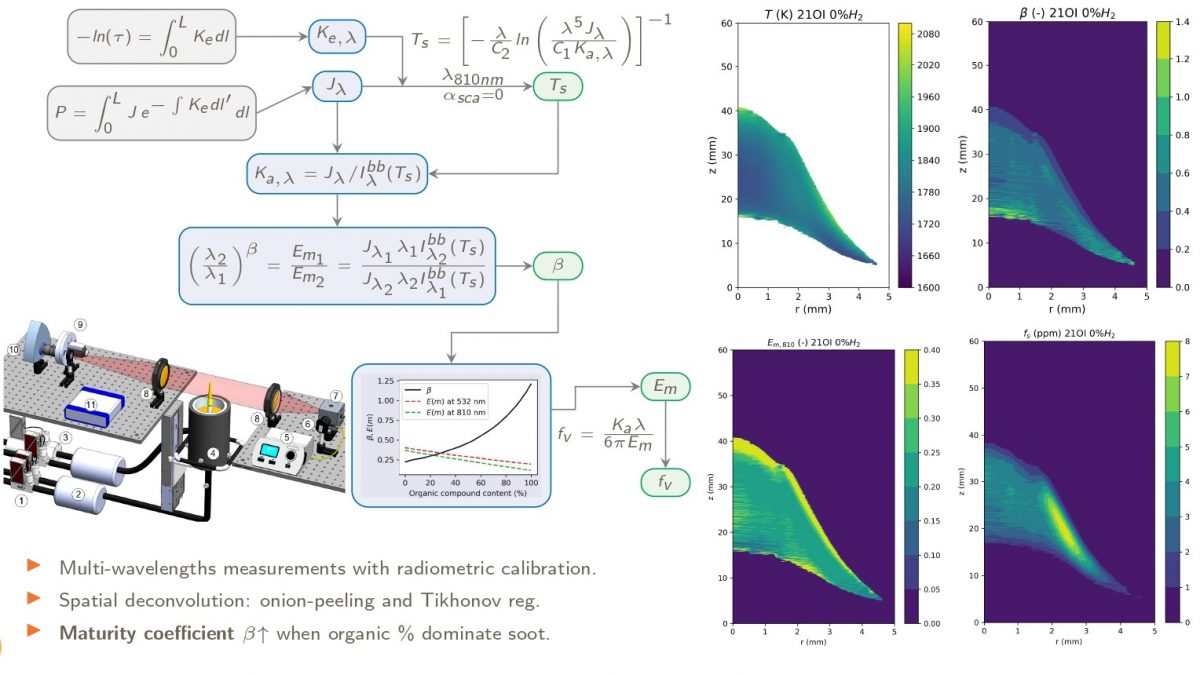
Mitigating soot emissions from hydrocarbon combustion remains a critical environmental and health challenge. Adding hydrogen to hydrocarbons reduces soot formation but can also alter particle composition and toxicity. Accurate, non-intrusive soot characterization requires knowledge of its optical properties, particularly the absorption function E(m) and the particle maturity level. Although E(m) is often treated as constant, it varies both spectrally and spatially within the flame. By combining multi-wavelength absorption and emission measurements, spatial distributions of temperature, E(m), and soot volume fraction can be obtained. Experiments in laminar diffusion flames show that hydrogen addition to ethylene non-premixed flames decreases soot concentration and radiation, while higher oxygen indices enhance soot formation. Flame temperature is governed mainly by oxygen, and hydrogen promotes soot maturation toward more graphitic particles, especially along the flame centerline under high-oxygen conditions
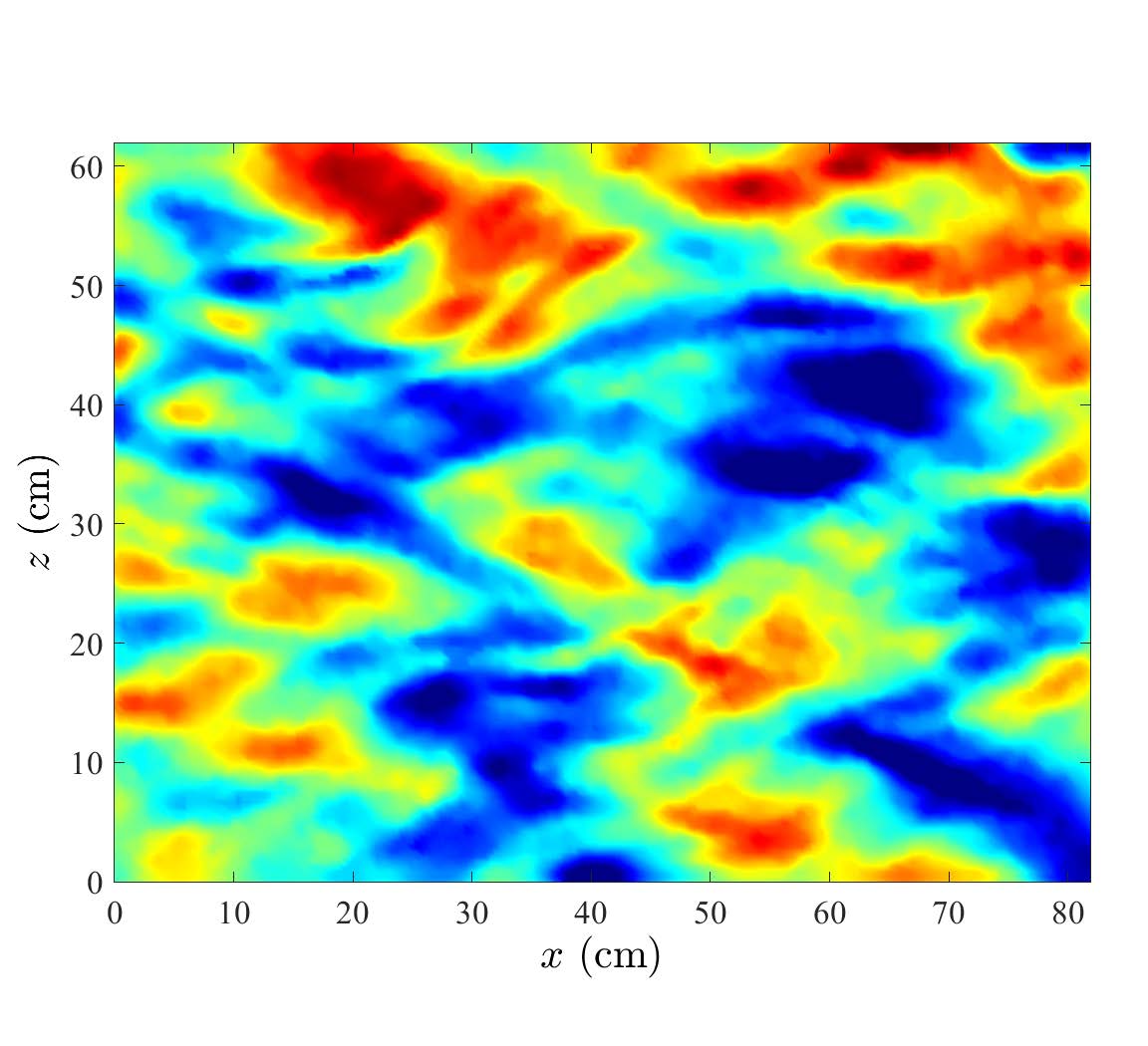
La stratification en densité des fluides modifie profondément leur dynamique en permettant la propagation d’ondes internes de gravité dans leur volume. Leur description, et notamment le problème de la « turbulence stratifiée », est essentielle pour la modélisation de l’atmosphère et des océans. Il est en particulier proposé que la dynamique océanique à petite échelle résulte d’une turbulence d’ondes internes faiblement non-linéaire, sans que cette description n’ait pour l’instant pu être confirmée de manière définitive. Durant ce séminaire thèse, je vous présenterai nos travaux portant sur une étude à la fois expérimentale et théorique de la turbulence d’ondes internes de gravité.
Déplacer des gouttes de liquide peut être très utile, notamment dans les dispositifs micro-fluidiques (lab-on-a-ship) ou afin d’accroitre les performances en transfert thermique (condensation en film ou en goutte…). La modification de la mouillabilité d’un matériau nécessite de mettre en œuvre des traitements physiques (texturation…) et/ou chimiques (greffage, dépôt…) afin de pouvoir ajuster cette propriété de surface, idéalement de superhydrophobe à superhydrophile. Cependant, déplacer une goutte sans action extérieure (gravité, pression…) autre que la mouillabilité nécessite non seulement de pouvoir changer la mouillabilité mais aussi de la faire varier spatialement. La question du profil optimal de mouillabilité de ces matériaux, communément appelés « à gradient de mouillabilité », se pose alors. Optimiser (ici numériquement) une telle propriété nécessite un modèle numérique fiable. Notre choix s’est porté sur l’utilisation de la méthode de Boltzmann sur réseaux (LBM), qui en plus de retrouver l’équation de Navier-Stokes permet de modéliser des problèmes multiphysiques (ici un écoulement diphasique sur une plaque avec prise en compte de la tension de surface et d’une équation d’état représentative du fluide). Après une comparaison des performances (il s’agira ici de maximiser la vitesse de déplacement d’une goutte sur une longueur donnée) de profils de mouillabilité analytiques (quadratique, linéaire…), les premiers résultats d’optimisation (gradient en différences finies + multi-échelle) de cette propriété seront présentés et discutés.
